The Art of Lasting in Bespoke Shoemaking
Introduction
Bespoke shoemaking is a time-honoured craft that prioritises individual fit and craftsmanship over mass production. Central to this process is the wooden last, a three-dimensional model of the foot that serves as the foundation for every pair of custom shoes. The last determines not only the shape and volume of the finished shoe but also how it distributes pressure and accommodates the unique contours of the wearer’s feet.
In the United Kingdom, bespoke shoemaking has a long heritage, with workshops in London and Northampton maintaining traditions that date back centuries. While techniques have evolved, the principle remains: a shoe built on a well-made last can offer a level of comfort and support that is difficult to achieve with standardised sizing. This article explores the step-by-step process of using wooden lasts to shape custom shoes, highlighting the skills and considerations involved at each stage.
Understanding the role of the last provides insight into why bespoke footwear commands significant time and expertise. It is a process that combines precise measurement, skilled handwork, and an intimate understanding of biomechanics and materials. The following sections outline the key phases, from initial assessment to the final shaping of the upper, illustrating how each step contributes to the overall fit.
Foot Assessment and Measurement
The journey to a custom shoe begins with a thorough assessment of the client’s feet. This is not simply a matter of tracing an outline; it involves capturing the foot’s three-dimensional geometry, including length, width, girth, and volume. A bespoke maker will typically take a series of measurements at key points, such as the ball, waist, instep, and heel, using a flexible tape measure. These measurements are recorded alongside notes on any peculiarities, such as bunions, high arches, or differences between the left and right foot.
In addition to linear measurements, the maker may create a plaster cast or use digital scanning to obtain a precise replica of the foot. This cast serves as a reference throughout the last-making process, allowing the maker to verify that the last accurately reflects the client’s foot shape. The assessment also considers the intended use of the shoes—whether for formal occasions, everyday wear, or specific activities—as this influences design choices like toe shape, heel height, and sole thickness.
The information gathered during this phase is critical because it forms the basis for the last. Any inaccuracies at this stage can propagate through the entire process, leading to discomfort or poor fit. Therefore, experienced makers take their time, often conducting multiple fittings to ensure that the measurements are comprehensive and reliable. They may also discuss the client’s previous footwear experiences to identify preferences and potential problem areas.
Once the measurements and casts are complete, the maker creates a detailed specification for the last. This includes the desired toe shape, heel height, and overall aesthetic, which must be balanced with the functional requirements of the foot. The specification serves as a blueprint for the next stage: carving the wooden last.
Carving the Wooden Last
The creation of a wooden last is a skilled craft that requires both artistic sensibility and technical precision. The maker begins with a block of seasoned hardwood, typically beech or maple, which is chosen for its stability and resistance to warping. The block is first cut to approximate dimensions, and then the maker uses a combination of hand tools and sometimes machinery to shape it into a rough form that resembles the foot.
The process is iterative. The maker continuously refers to the measurements and plaster cast, removing small amounts of wood and checking the fit against the cast. The goal is to create a last that mirrors the foot’s contours while also incorporating design elements that affect the shoe’s fit and appearance. For example, the last may be built up in certain areas to accommodate a orthotic or to provide extra room for a high instep.
Throughout carving, the maker pays attention to the last’s bottom, known as the bottom plane, which determines the shoe’s stance and heel pitch. The last’s toe spring—the upward curve at the front—is also shaped to facilitate walking and reduce stress on the foot. These subtle adjustments are made based on the maker’s experience and the client’s specific needs, as even minor changes can significantly impact comfort.
After the rough shaping, the last is refined using finer tools such as rasps and sandpaper. The maker ensures that the surface is smooth and that all measurements are accurate. At this point, the last is essentially a wooden replica of the foot, but it may still undergo further modifications during the fitting process. The completed last is then ready for the next stage: creating the shoe’s upper.
Building the Shoe Upper on the Last
With the last prepared, the shoemaker begins constructing the upper, which is the part of the shoe that covers the foot. The upper is typically made from high-quality leather, although other materials may be used depending on the design. The leather is first cut into pattern pieces based on the last’s dimensions. These pieces are then skived—thinned at the edges—to allow for smooth folding and stitching.
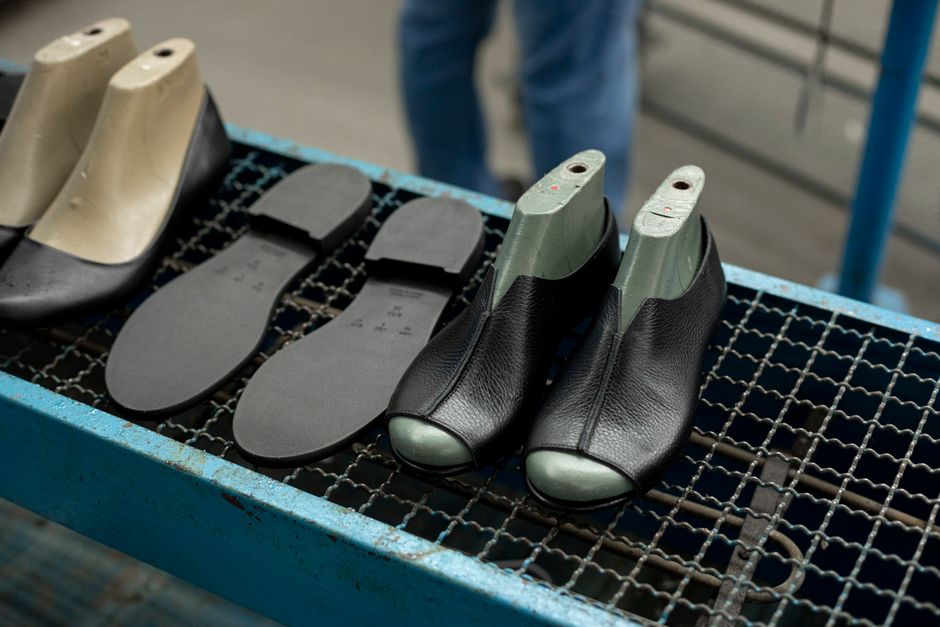
The pieces are stitched together to form the upper, which is then dampened to make it pliable. The upper is pulled over the last and temporarily secured with tacks or adhesive. This process, known as lasting, requires careful manipulation to ensure that the leather conforms to the last’s shape without wrinkles or excessive tension. The maker works from the heel to the toe, gradually stretching the leather and tacking it in place.
Once the upper is lasted, it is left to dry, allowing the leather to take on the shape of the last. After drying, the upper is removed from the last temporarily for the addition of stiffeners and other components. The heel stiffener, for instance, is inserted between the upper and the lining to provide support. The upper is then re-lasted, and the sole is attached.
The lasting process is critical because it determines how the shoe will fit and wear. If the upper is not properly lasted, the shoe may lose its shape or cause discomfort. Therefore, the maker takes care to ensure that the leather is evenly stretched and that the last’s shape is faithfully reproduced. This stage also allows for minor adjustments to the last if needed, as the maker can observe how the upper behaves when conformed to the last.
Refining Fit Through Fittings and Adjustments
Bespoke shoemaking typically involves at least one fitting before the final shoe is completed. During a fitting, the client tries on a trial shoe—often made from the same last but with a temporary sole—to assess the fit. The maker observes how the shoe accommodates the foot, checking for pressure points, slippage, and overall comfort. This feedback is invaluable for making adjustments to the last.
Adjustments may involve adding or removing material from the last to relieve pressure or fill gaps. For example, if the client experiences tightness across the instep, the maker may reduce the last’s volume in that area. Conversely, if there is excessive movement in the heel, the maker may build up the last’s heel seat. These modifications are made with precision, as even a millimetre of change can affect the fit.
The fitting process may be repeated until both the client and the maker are satisfied with the fit. In some cases, a second trial shoe is made to verify the adjustments. This iterative approach ensures that the final shoe will meet the client’s expectations. It also allows the maker to fine-tune the last for future orders, as the last is kept on file for subsequent pairs.
Once the fit is confirmed, the last is used to construct the final shoe. The upper is lasted again, and the sole is attached using traditional techniques such as hand-welting or Blake stitching. The finished shoe is then polished and finished, ready for delivery. The entire process, from measurement to final shoe, can take several months, reflecting the level of craftsmanship involved.
Conclusion
The art of lasting in bespoke shoemaking is a meticulous process that transforms a block of wood into a personalised foundation for custom footwear. It requires a deep understanding of foot anatomy, materials, and construction techniques, as well as patience and precision. While the steps outlined here provide a framework, each maker may have their own variations and refinements developed through years of experience.
For those considering bespoke shoes, understanding the role of the last can enhance appreciation for the craft and the value of a well-fitted shoe. It is a process that prioritises individual needs over mass production, resulting in footwear that can provide comfort and support tailored to the wearer. As with any craft, the outcome depends on the skill of the maker and the collaboration with the client, making each pair a unique creation.